The Row
Inspired to Endure: Why I’m Ready to Row
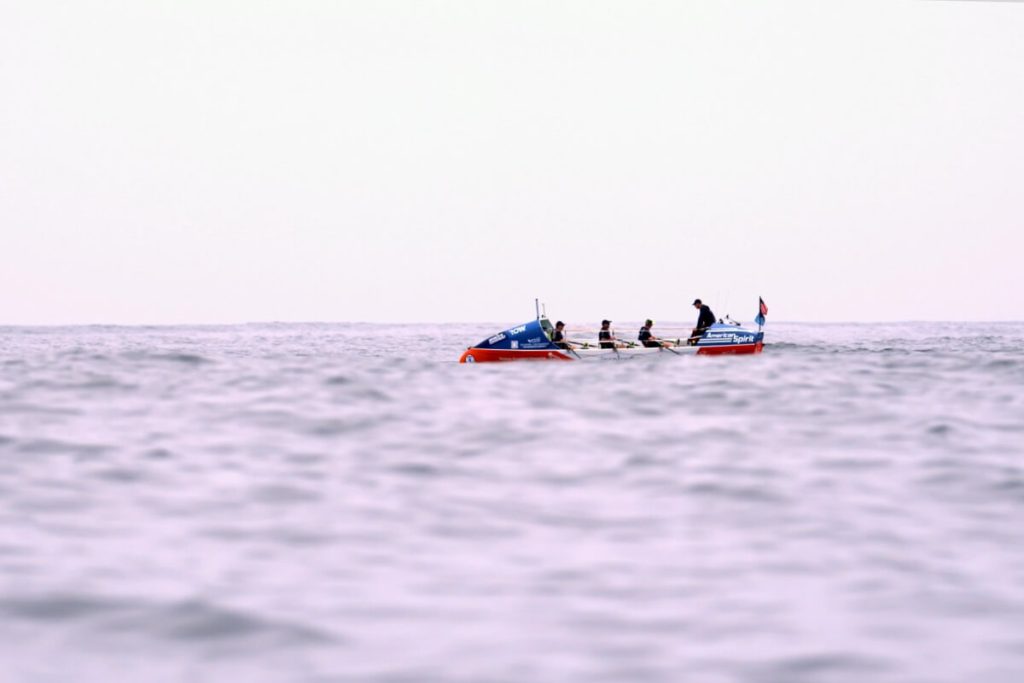
It was 11 p.m. on the third day of our mid-Pacific row from California to Hawaii. On our boat, American Spirit, two teammates Pat and Pete had either just lost their recent stomach contents or were about to. Scott and I were preparing the para-anchor to set the boat in a safe manner. Waves were crashing into and across our 28-foot ocean rowing boat from all directions. She was holding and not capsizing or getting pinned down. Generally, we felt stable and in control. That said, it was pitch black, and every wave that hit was a hidden power of force that upended our attempts to safely secure the boat in a manner that would allow us to pause.
With half our rowers effectively out of commission, we knew the two of us would dangerously exhaust ourselves if we were to continue rowing into these conditions for an undefined amount of time. We looked at each other and had the same thought at that moment—could we do this row? Already we were pulling safety measures we never anticipated having to use. Then, we thought of all the supporters and donors eagerly behind our incredible endeavor who were cheering for us from dry land. Yet, in the thick of a major eastern Pacific storm, we questioned our potential for the first time. Intuitively, Scott and I came to the realization that this crossing was so much bigger than the four of us. From experience, we also knew that whatever was transpiring now would eventually change. And we would complete our row to Hawaii.
Three years earlier, in April 2021, my good friends Scott Forman, Ryan Kennedy, and I were dropping down the south rim of the Grand Canyon with the goal of running rim to rim to rim in a day. This was in celebration of Scott’s 50th birthday. Always game for adventure, the three of us threw ourselves into it. Despite canyon bottom temperatures in the mid-90s, we flew through the miles. As we approached Cottonwood and the first opportunity for water, I teased Scott that since this was his 50th adventure, what would we do for mine? As always his response was “whatever it is, I am all in.” We trudged on, reaching Pump House after only five hours, a comfortably fast pace for some “old dudes”. After a good rest and fueling up, the heat was taxing me, and knowing the uphill was about to get real to the north rim, I threw in the towel. Worn down by the heat, sadly I left the two desert dwellers to accumulate the full experience and returned casually back up Bright Angel by sunset.
Scott and I met in the summer of 1994 in Bellingham, Washington, where we were guiding for the American Alpine Institute. We did that for five years in the North Cascades, as well as Bolivia and Ecuador. Scott went on to become an emergency room physician, while I continued to pursue mountain guiding and exploring in the Himalayas into the mid-2000s. Eventually, we settled closer to each other, he in Albuquerque, New Mexico, and me in Durango, Colorado, each growing our families. I kept busy with youth baseball and living life as a dad and husband. Scott and I rekindled our adventures together and pursued trail running, ski mountaineering, and bike riding.
In the fall of 2021, I happened on a podcast conversation between Rich Roll and Jason Caldwell about Jason’s experiences rowing the Atlantic and Pacific Oceans, and the world records he and his team set. This sounded really hard—but right up my alley—with physical endurance, mental resilience, and mother nature all intertwined. While a far cry from my strenuous mountain expeditions, it was intriguing. I began following The World’s Toughest Row and Latitude 35 (Caldwell’s ocean rowing team) into the summer of 2022, when four women set the world record from San Francisco to Oahu.
This sounded really hard—but right up my alley—with physical endurance, mental resilience, and mother nature all intertwined.
When I learned there was an info call on The Great Pacific Race to take place in the summer of 2024, I reached out to Scott, and he joined me for the call. During this initial introduction, we learned that American Spirit, the boat the record-setting women just rowed, as well as Caldwell’s boat from previous crossings, would be available to buy. I received a text from Scott during the call: “Let’s buy the boat.” The butterflies in my stomach jumped. Holy shit, are we really going to do this? We stayed on the call with the Lat 35 folks and agreed to stay in touch. By the fall of 2022, we had made the purchase. American Spirit was shipped back from Hawaii and into our lives.
Scott was able to secure a location for the boat in a quaint marina in Redwood City, California, and in December, he and I, along with our friend Peter Durso, who was interested in potentially rowing, made our first journey to visit the boat. Pete and Scott were in residency together. Pete, a former triathlete, competitive swimmer, and bike racer, never says no to an adventure. We met up with Lat 35 in the south San Francisco Bay and had our first tutorial and experience moving the boat. I had grown up with an 18-foot Pacific White Hall row boat, fishing the tidal waters of Big River in Mendocino, California. It had been years since I had pulled oars. Immediately the steady splash of the oar, the response of the boat gliding across the water, the physical effort, all felt so natural. Oh boy, this was it. Could we move this boat 2,800 miles to Hawaii? We had a long runway to determine how possible this was, but in that moment it just felt right.
Ocean rowing is not a new sport. In fact, the first ocean to be rowed was the North Atlantic in 1896, from Manhattan to England in a respectable time of 56 days, a record that stood for 110 years. While that first intrepid duo would meet up with East- and West-bound steam ships to replenish, nowadays teams row fully self-supported for the duration of the crossing. Teams anywhere from solo to twelve-person boats row in two-hour shifts: two hours on the oars, two hours off for the duration, which takes anywhere from 30 to 100 days (the longer usually for solo rowers).
The type of endurance that rowing entails, while also meeting the ocean’s full breadth of challenges, is no small feat. The World’s Toughest Row organizes a race that started on the Atlantic under different leadership in the late 1990s. They added a race on the Pacific in 2023. The World’s Toughest Row provides guidance, training, and support for prospective ocean rowers to succeed in their endeavors. With stringent safety requirements and required hours of rowing, day and night, we knew that The World’s Toughest Row Pacific 2024 would be the safest way to attain our goal. We would be one of nine boats rowing 2,800 miles from Monterey, California, to Hanalei Bay, Kauai, Hawaii.
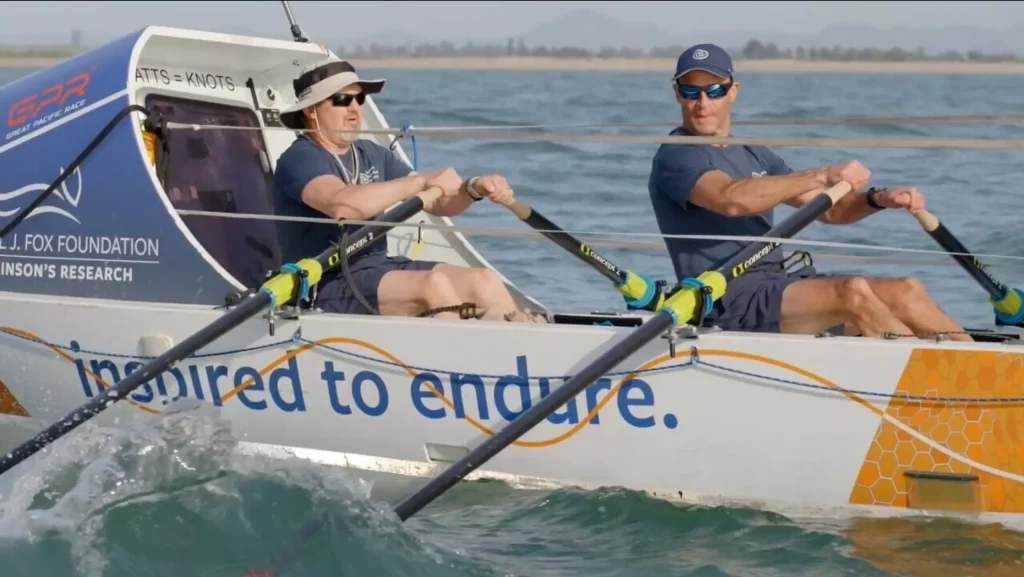
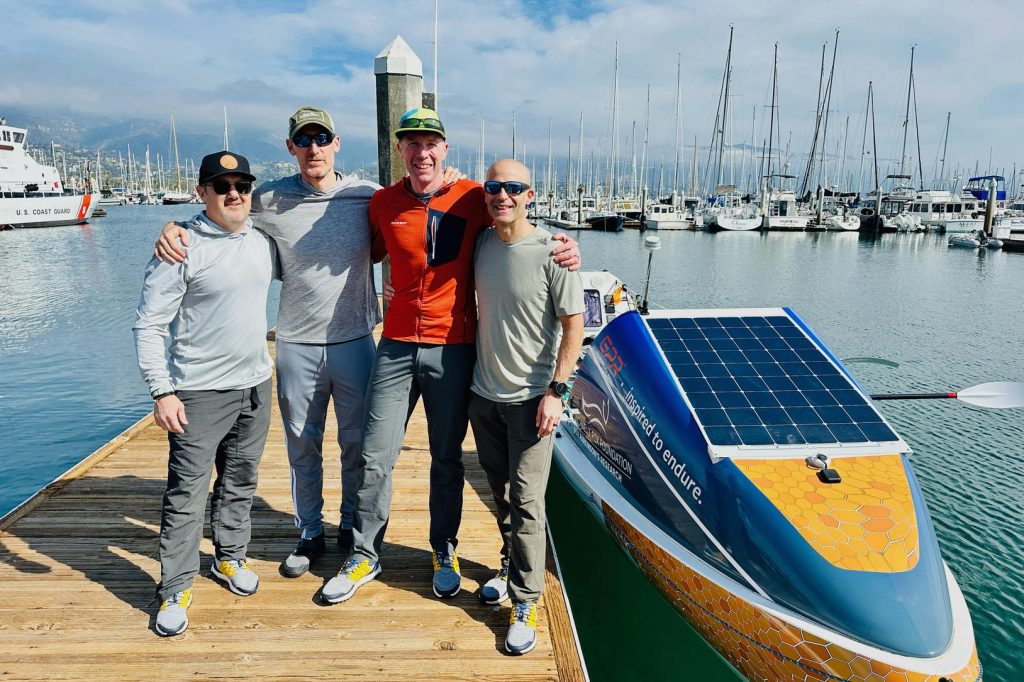
Pete, Scott, and I agreed to begin by traveling to the San Francisco Bay each month for a training row and at the same time find a fourth teammate. Finding a person willing to commit to such an endeavor was a challenge. As luck would have it, we secured funding with the commitment to use our row to raise funds for The Michael J. Fox Foundation for Parkinson’s Research. This was an easy ask for me, as I have or had friends with the disease, including my neighbor and co-worker Patrick Morrissey, who was diagnosed in late 2019. Pat is a former Division 1 wrestler, mountain and road biker, and generally an amazing athlete and human being. As we explored potential teammates, I approached Pat about our endeavor asking that he support us in some way, yet to be determined, that brought deeper meaning as someone with Parkinson’s. Not two months after this conversation, Pat called me one evening and through the conversation informed me that he wished to row.
Pat was unsure how the row would affect his disease, and we all agreed to give him the summer months of training to see. We were lucky enough that our social media manager, Barry Hayes (Shark Bait Socials), had rowed the Indian Ocean in 2018 with Robin Buttery, the only other person with Parkinson’s to have successfully rowed an ocean. Not only had Robin been successful, but his symptoms all but diminished for six months preceding the row. This aspect was very enticing for Pat, who was slowly adjusting to the reality of living with this progressive disease. As our on-water training unfolded and at-home training progressed, Pat saw remarkable improvement in his condition and, at times, even while rowing. There were times I forgot that he had Parkinson’s while on the water, which we all found to be a remarkable observation, and a clear indication that he would be fully capable of completing this row. Our aptly named Team Human Powered Potential (Team HPP) was complete and ready to row.
Team HPP officially launched our soon-to-be extraordinary endeavor in May 2023 with a training camp in the San Francisco Bay with British Ocean Rower and explorer Angus Collins, who would be our coach and weather router for the row. Angus had set four world records across the Indian, Atlantic, and Pacific Oceans, two of these aboard American Spirit. Our training camp involved learning all the ins and outs of the boat as well as embarking on our first 24-hour row. That was an eye-opener, not only regarding the challenge we had agreed to undertake, but also the complexity of training in the SF Bay.
We encountered heavy winds from Sausalito out to Alcatraz, then as the tides shifted, gigantic hydraulics moved north into San Pedro Bay. We took a pause at Angel Island after a near broach of the boat. That night, as we rowed under the Richmond San Rafael Bridge, Pat and I were casually rowing at seven knots—most boats average two-three knots. As we flew north into the night, we recognized that while this was luxurious, we would eventually run out of water. By 1:30 a.m. we were on anchor on the side of a busy shipping lane, awaiting the tidal shift to turn so we could row back south.
As we flew north into the night, we recognized that while this was luxurious, we would eventually run out of water.
Five of us crammed into the two cabins barely with room for one, and waited for the shift in conditions. Getting tugged and tossed with the small swells provided an indication of things to come. At 3:30 a.m., with the tide shifting but the general swell less supportive, Angus made the call to start rowing. Manually steering with three on the oars, we pulled hard into the sunrise to break the headwind and the counter swell, eventually rowing into the sleepy harbor of Loch Lomond, eight miles north of our intended return destination of Sausalito. While successful in terms of time on the water and battling a variety of conditions, the SF Bay was showing that it would be a challenging training ground to effectively and efficiently get the hours we needed to qualify for the World’s Toughest Row.
As June rolled around, and the winds along the Northern California coast and the Bay showed their true strength, we shifted our training to Ventura and trailered the boat to the Santa Barbara Channel. This would prove to be a fantastic area for long rows, wildlife, and generally an opportunity to become very comfortable with the boat for our upcoming objective. For the next 10 months, we flew to Southern California and rowed for multi-day efforts depending on available time and conditions. We experienced negative currents, winter swells, and unsparing wind gusts. Building up a total of 195 hours on the boat (the race required a minimum of 120 hours), our time together solidified the strength, bonded our team, and created a brotherhood for the challenging endeavor.
On June 8, 2024, we, along with eight other boats, rowed out of Monterey, California, under low-level fog, comfortable temperatures, and easy seas. We departed with tremendous cheering, support, love, and care from our family, friends and the greater Parkinson’s community who lined the docks for the noisy sendoff. This was intensely emotional. Going into the unknown with each of us wondering—how long would the row take? How hard would the first week be as we rowed against the south-bound current before meeting the promised trade winds that would have our back all the way to Hanalei? Would we continue to honestly support each other, no matter what happens? Acknowledging our team was as prepared as could be, we rowed out confidently and—with fragile nerves—headed west.
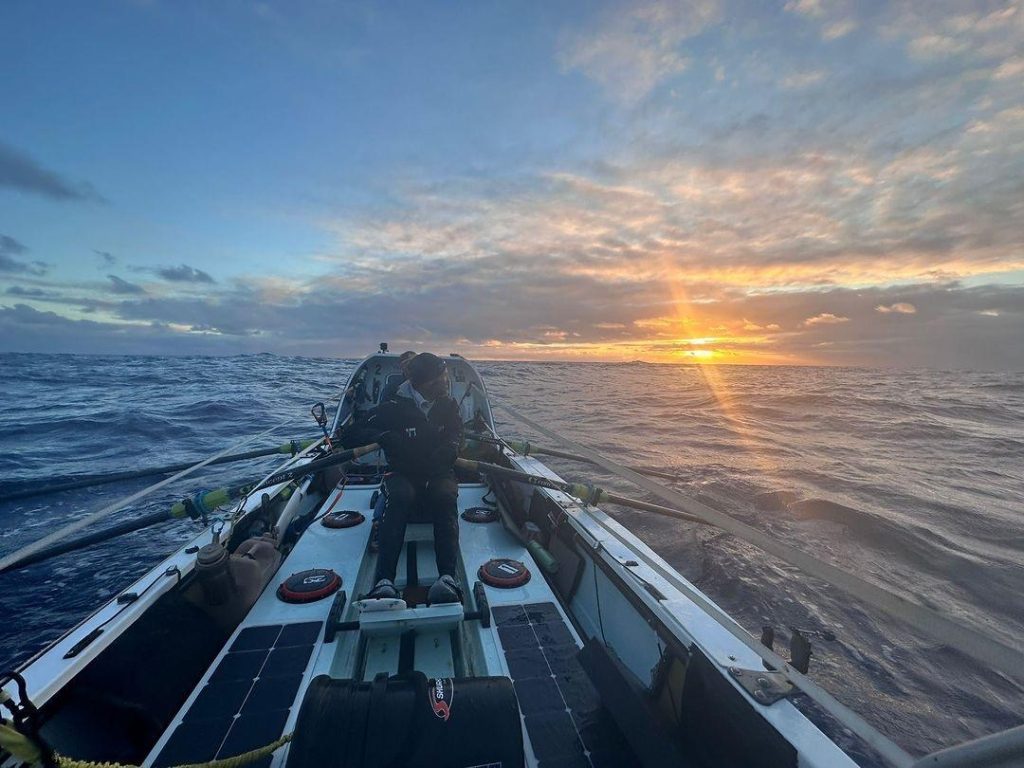
Life on an ocean rowing boat is one of simplicity. Rowers are on the oars, typically for two hours, followed by two hours off. During the time off, there are chores to be done: clean off the nightly gift of flying fish from all over the deck; make water from the desalination unit; check navigation; have a daily team meeting and check-in; and take calls with the duty officers from The World’s Toughest Row. This all culminates in getting as much to eat and sleep as possible. During most daylight hours, a rower might sleep an hour between shifts; more at night when there is less to do. While simple, rest is limited and sparing. Food consists of two freeze-dried meals per day, cooked on a Jetboil, along with a daily snack pack filled with calorie-dense foods to sustain us on and off the oars. From gels to jerky, nuts, and bars, we consumed a total of 4,500 to 5,000 calories per day, while burning nearly double this from rowing. The variables day in and day out are defined by the ocean, the weather, and each rower’s mental and physical condition.
The first two days of the row were relatively comfortable and manageable until a storm developed to the north, pushing high winds and heavy seas in our direction. It was this contribution, along with sea sickness, that we, the only team to do so, went on para-anchor to take a breather and wait it out. During this period in the cabin, feeling the waves pull ever harder at the front end of the boat, it hit me that we were in some serious conditions, and rowing was our way out. In the middle of the night, my InReach lit up as Angus began pinging messages “You have to get rowing”, “conditions are going to stay this way and you already rowed hard into it for twelve hours, let’s go boys”. I ignored this until sunrise at which time Scott and I pulled in the parachute and began to pull hard. Getting on course and back into the swing of things, we learned later that at the same time, one of the boats, a four-person women’s team, wrecked by sea sickness and the brutal conditions, had made the heart-wrenching decision to turn back and row towards San Luis Obispo. This row was real and not for everyone.
The ocean did not let up for another five days. A constant beating by heavy seas and rogue waves knocked rowers out of their seats, drenched our fatigued bodies, and even broke an oar, smacked by the ocean against a human body. One morning around the sixth day, when I came out for the sunrise shift, donning my soaking wet foul weather gear, I opened the hatch and looked at Scott. His eyes were saucers. Then I looked out at the ocean—black, glassy rollers with thunderous white caps and full of energy. We had just crested a 30-foot wave, dove off the back, and stalled in the trough before rising up on the next one, even bigger. Oh shit, I thought, this is very intense, and these guys just rowed this in pitch black the last two hours. We were in it.
Then I looked out at the ocean—black, glassy rollers with thunderous white caps and full of energy.
Sleep deprivation began to take hold as we continued in our rotation, though at times altered with numbed minds, full of fear, pulling the oars on rote movement: rowing, rowing, rowing. Pat, exasperated by Parkinson’s, which at times shut down his body, began to exhibit stress. Scott and I would pick up the shifts, furthering the effort and strain on our bodies. It was necessary, and we expected that some of us would pick up shifts from time to time. So it was that rest was reduced and rowing intensified. I kept reminding myself this, too, will change. Lack of sleep, hallucinations, and the omnipotent power of the ocean made me question what the future might hold.
At times, we fell into a comfortable routine when the swell gently subsided and pulled southwest as California turned into Mexico on the chart plotter, with the coast further behind us. Our course gently turned further west. Angus consistently pushed our course while encouraging us about the Tradewinds to come, once we departed the continental shelf. During a midday shift, Pat and I were on the oars and noticed a distinct change. It was as though the ocean became a washing machine, waves from all directions, wind swirling, clearly a body of water unsure of itself, inner battles creating surface havoc. We remarked that “this is the shelf,” deep water here we come, and so by day’s end, it unfolded. As we crawled through the toss and turn, the conditions relented and became more favorable. Off the stern, the waves began to push us, ever so gently, rolling us in the direction we wanted to go. It was a small shift, but a welcome one, after what had transpired over the previous 10 days.
The waves continued to subside and by morning we were under cloudy skies with a greyish hue on the blue water, flat as a pond. The effort on the oars was all that would move us. While we had hoped for some kind of reprieve, this was not what we had in mind. We rowed for a day of calm—resting, eating, drinking. Peter even jumped in the water to clean growth from the hull to increase our speed. Angus had texted, “Scraping the growth will increase speed by one knot as you near the finish; get to it, there are few chances.” Pete was our resident swimmer, having swam through high school, and was our best bet for this endeavor.
I would jump in to accomplish the same task, about 10 days later during calm conditions when I had the chance. It was the only moment to get off the boat for the entire crossing. I found it exhilarating and refreshing to swim and get a full body cleanse, while also contemplating our smallness in the world’s largest ocean, knowing the only firm ground beneath my feet was 13,000 feet below. The clear, brilliant blue water was breathtaking, along with small fish, feeding off the fresh barnacles as I scraped the bottom. It was a welcome reprieve from the monotony of rowing, eating, and sleeping. And revelatory, being able to move my body in ways not experienced since departing Monterey.
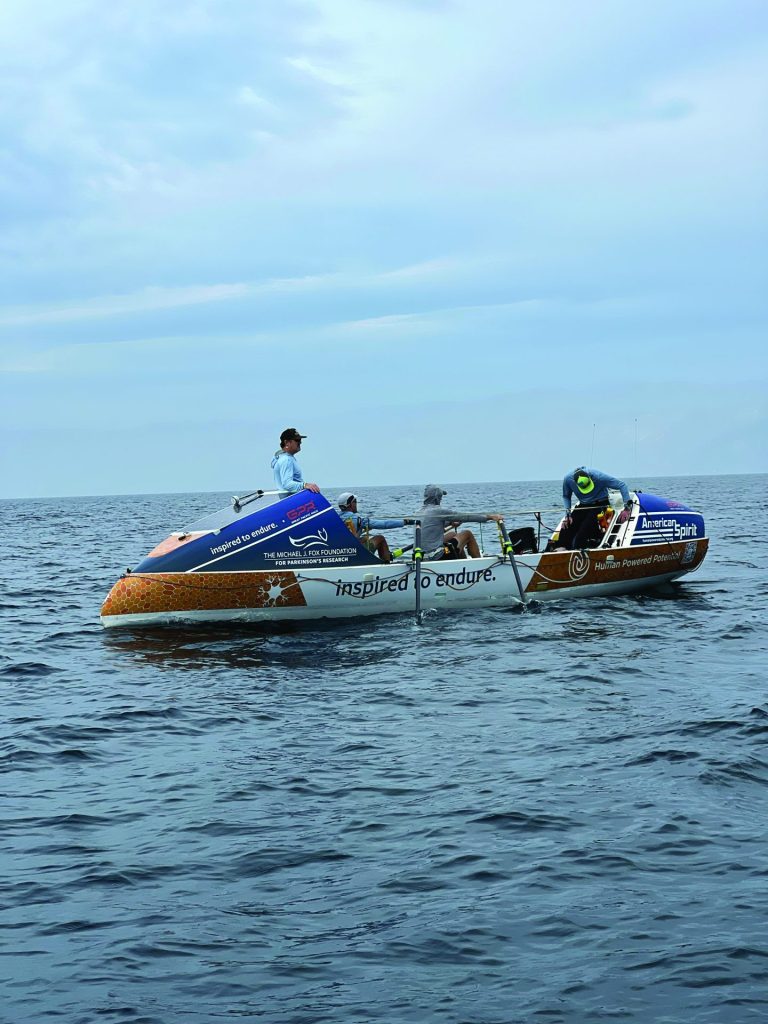
Before our departure, crossing the Pacific Ocean by row boat was described to us as having different phases. You begin by countering beam (side on) waves and wind for the first five days. Then gradually turning southwest, westerly tailwinds from the trades would pick up, increasing speed and cutting overall time for the crossing.
However, in 2024, conditions were not as pretty as painted. The initial five days became 10. As we made the westerly turn, Angus provided forecast after forecast of favorable tailwinds. They were slow to materialize. This is not to say that we did not have days, and nights, of good conditions, hardly rowing yet moving at 2.5-3 knots. We only experienced this for a total of seven days, whereas in past years, the favorable winds normally boosted rowing for a solid two to three weeks. On the nights we experienced them, favorable conditions were well-received. Being able to lie on deck, watch the night sky, and glide forward allowed much-needed rest. Not to say we ever rested easy. Occasionally without warning, the winds would shift abruptly, spinning the boat ninety degrees into the waves, soaking the resting rowers, and creating moments of panic as we jumped on the oars and pulled hard to reorient the boat.
I estimated it took a solid two weeks before an honest rhythm of the shifts, rest, eating, and pacing ourselves fell into a healthy grind. Despite less than favorable conditions, the miles ticked by. This was not without physical tolls beginning to exhibit in and on the body. Our hands had developed serious blisters, which were still callousing, making the oar handles painful to hold. Seat pads that felt luxurious at the start now felt like sitting on bricks, as the rear end diminished in extra padding itself. No matter, the boat had to be rowed, and we were prepared; gloves and palm pads were used, new seat pads brought out to adjust and change the pressure points.
We received updates on the other boats, and knew we had slipped from well ahead to being towards the rear of the pack. The boats were spread out by hundreds of miles north and south, west and east. While our collective competitive nature was tempted to give chase, this was not our goal. None of us owned an ego-filled need to be first in this crossing. We wanted to finish and be stronger brothers than when we started. This was coming together. There was healthy tension as fatigue set in, some pulling very little, and others contributing more. The overall enthusiasm for success restarted once we had less than 1,000 miles to go, then exalted with 500 to go. The slow iterative process of making it to the finish got charged when we stopped counting the days since departure and began counting down the days to arrival.
We came into the row with a simple goal time-wise: finish in under 40 days. On day 23, Angus started looking ahead towards weather, speed, and reality. A message from him truly demoralized our efforts. We would be finishing in over 40 days. This was painful to realize. Our collective diminished strength would not allow the increased speed that would be needed, nor were the conditions in any way favorable. So, we resigned slightly, but also decided to set daily goals. Let’s go for 70 miles per day, and so we did. This slight motivation actually increased our abilities, despite continued overwhelming fatigue. Setting way points, knowing our potential was there, it would just take work.
Looking at the bright side, as an endeavor like this unfolds, one benefit, despite nature’s constant curve balls, is that the food we brought was getting eaten. The boat got lighter—and so had we, in muscle and therefore strength. While the boat did lift a bit, our progress generally was slowing. Barry, our social media manager, knew about demoralization from his own experiences crossing the Indian and Pacific Oceans, and reminded us of the importance of support from the greater community. One day, we received a message from him with over 100 comments shared on Instagram and Facebook, from those following our journey. This was so powerful; it truly gave us strength. We passed my phone around, and each of us disappeared into the cabins, crying, absorbing the power of fellow human spirits in support of our crossing.
The boat got lighter—and so had we, in muscle and therefore strength.
An absolutely incredible aspect of what success looks like, that some may overlook, is thinking that individual tenacity and resilience equal success. Before this row, on the podcast with Jason Caldwell, he shared that a row is broken into three parts. The first is strength—we are fresh and full of energy; the second is grit—passion and perseverance to make it; the third is the tailwind of community—our family, friends, and everyone out there supporting us like powerful bursts, pushing us to the finish. While the row may have had many more parts, I share this and believe in this general concept. Whenever desperation set in, some manner of support would come through, and with it a reminder that what we were doing was so much bigger than any one of us. We may have been the ones putting in the effort, but behind us were thousands, cheering from afar, becoming the wind and waves that carried us toward Hawaii.
On July 2, our 24th day on the water, we celebrated my 50th birthday. Ever since I was little, my mom made a lemon meringue pie for my birthday, and, amazingly, out came one from an Amazon bag—lemon meringue on a graham cracker crust. Not quite my mom’s homemade but absolutely emotional. Along with this was an amazing chocolate cake from Scott’s wife, Catherine. Then came the big unveiling of sun shirts for everyone with the map of our course and the words “B-man’s 50th.” Three of the shirts were emblazoned with “This was not my idea.” Mine said “This was my idea”. Each of these thoughtful gifts made the day both remarkable and encouraging. Then it was back to the effort.
The slow iteration toward arrival was marked by additional milestones, each of the Hawaiian islands coming into view without having to zoom in or out on the Chart Plotter, then finally seeing Oahu with our own eyes, the lights illuminating at night. Civilization was still there. It was not just satellite phone calls and text messages. Additionally, our families had planned their travel, found housing, and were packing to prepare to arrive ahead of us. Then, on the morning of July 18, off the bow of the boat, we spotted Kauai. Broad, murky, and indistinct on the horizon but promisingly tangible, our destination was in sight! This was it, we were going to make it. By morning, the green of the garden island was evident, then as if on cue an offshore breeze brushed across the boat, and for the first time in 41 days we smelled earth—the rich damp smell was intoxicating. Then a phone call came from the director of photography for our documentary as he prepared to launch and head out to film our arrival.
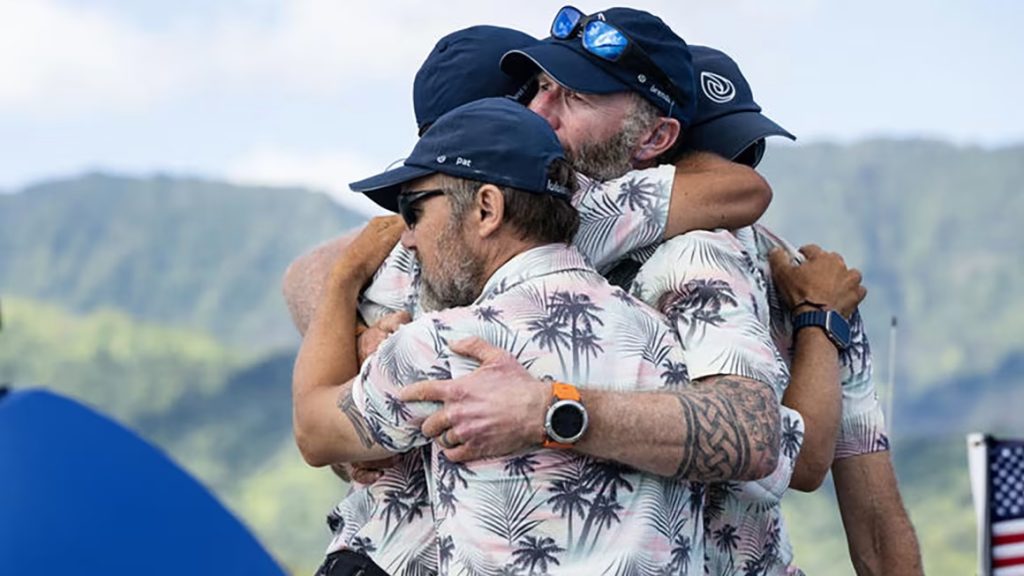
When we were just four miles away, we gave 10 hard pulls for each of our family members who had sacrificed so much over the last 18 months for us to train, travel, and ultimately embark on this endeavor. “Ten pulls for Dena” (Pat’s wife). “Ten pulls for Lara” (my wife). “Ten for Catherine” (Scott’s wife). “Ten for Tara” (Pete’s wife) And 10 for each of our children. The boat lifted out of the water. Burning our last matches, we sped towards our arrival in excitement of embracing these people, a heartfelt token of appreciation for their presence that was with us for the whole of the crossing. A mile from the beach, we could hear the roar of the supporters, filling our hearts with deep emotion, tears flowing as we pulled ourselves closer. The looming mountains above Hanalei Bay, welcoming us like outstretched arms. A most beautiful place to arrive after so much effort.
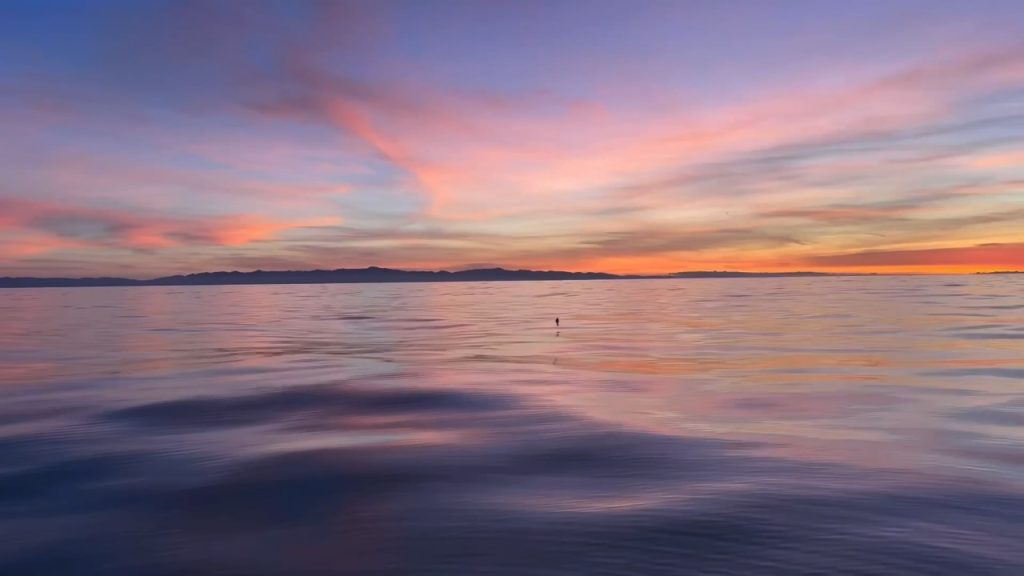
At just after 9 a.m. on July 19, we pulled up to the beach, surrounded by our loved ones and extended community. For the first time in almost six weeks, we slipped off the boat into the warm tropical waters with sand beneath our feet. Swaying and unbalanced after not walking for 41 days, we supported each other to the beach and buried ourselves in our families’ arms. We were done.
Our crossing was more than just the four of us rowing to Hawaii. We had set out with an ambitious goal of raising $28 million dollars (for the 2,800-mile row) for The Michael J. Fox Foundation for Parkinson’s research. When we stepped onto land, we had hit just under $24 million. Within two weeks, we would blow right by this goal. Setting it higher, thanks to my son, Evan’s incredible suggestion, we went to $41 million (for 41 days on the Pacific Ocean) and reached that goal less than two months after arriving. Our team looks forward to a cure for those enduring this disease.
We became the first four-man American team to row the mid-Pacific, and Pat the first with Parkinson’s to do so. At the podium on Hanalei Beach, I shared this: “Anything is possible, if you just put your heart and mind to it, don’t forget that.” Our motto for Team Human Powered Potential is “Inspired to Endure.” We are so inspired by every person with Parkinson’s and endured this crossing in solidarity for all who live with this progressive disease.